Round Robin or Knockout: What Each Format Rewards
Round robin or knockout: see how each tournament format values consistency, a peak performance, and recovery from defeat so you can read the stakes.
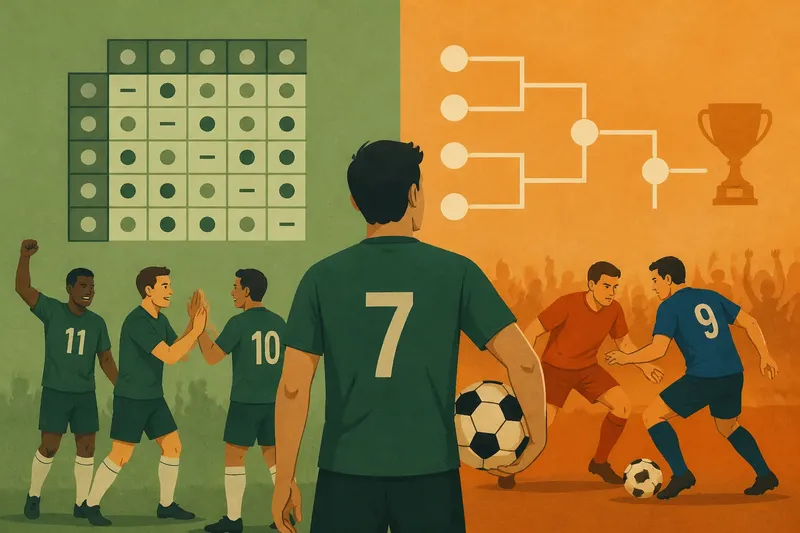
Round robin or knockout: the difference becomes clear when a team loses. In a round robin, it usually has another fixture in which to recover; in a knockout, that defeat ends its route to the title. The format changes not just the schedule but what a team must do well to survive and advance.
For spectators, that means a result needs context. A single spectacular game can decide a knockout tie, while a round-robin campaign asks teams to keep producing across several opponents. Neither structure is simply “fairer”: each rewards a different kind of performance, and the details of the tournament can shift the balance.
What does a round robin reward?
In a round robin, each participant plays every other participant in the group or competition, subject to the format’s precise schedule. Standings accumulate over those fixtures. A team that starts slowly may still climb, while a strong opening does not by itself settle the outcome.
That makes repeatability valuable. Teams have to manage changing opponents, fatigue, substitutions, and the pressure of knowing that a later match can matter as much as an early one. A narrow win still adds to the record; a loss hurts, but it does not necessarily end the campaign.
The structure can also reward depth. A squad may need different players or tactical adjustments across a run of matches, rather than relying on one peak display. Consistency does not mean every game looks the same. It means avoiding a damaging collapse often enough to remain in contention.
For a spectator, the table tells a developing story. Look beyond the top line: points, wins, draws, losses, and any tiebreak procedure help explain why one team sits above another. In some competitions, teams level on points are separated by goal difference, head-to-head results, or another published criterion. The ordering rule can change which match matters most late in the group.
Keep an eye on the remaining fixtures as well as the standings. A team near the top may still face its closest rival, while another may have completed its hardest matches already.
What does a knockout format reward?
Knockout tournaments make each tie a survival test: the winner advances and the loser is eliminated. That creates a clear, immediate stake. A team can be out after one poor performance, even if it was excellent before the tournament or would be favored in a longer series.
This setup places a premium on delivering when the opportunity arrives. A tactical plan that disrupts a stronger opponent, a decisive individual performance, or a composed finish in a tense moment can carry unusual weight. Yet one result can also be shaped by a bad day, a difficult matchup, or the rules for resolving a draw. The bracket records who advanced, not every reason the result might have gone another way over a longer contest.
Knockouts are not always a single match. A tie may use two legs, a best-of series, extra time, a shootout, or another deciding method. Those details affect how teams approach risk. Across multiple games, there may be room to adjust; in a one-off, a team may have to balance patience against the danger of leaving itself too little time to score.
Brackets also make the path visible. The opponent waiting in the next round can affect choices in the current one, but a team cannot advance by saving its best work for a match it never reaches. For viewers, the knockout’s sharp edge is the point: every tactical decision sits beside the possibility of elimination.
How do the formats treat a loss?
A round-robin loss is damage to a campaign; a knockout loss is usually its end. That distinction changes the emotional and practical value of recovery. In group play, a team can respond with a win, though the missed points may leave it dependent on later results or tiebreaks. In a knockout, the next chance may belong to another competition, not the same title run.
Recovery does not mean the round robin is forgiving without limit. A team that drops too many results can run out of room to catch the leaders. Nor does a knockout always offer no second chance: some tournaments include a lower bracket or a placement phase. Read the competition’s rules before treating any loss as final.
Imagine a fictional five-team group in which a side loses its opener but wins its remaining fixtures. Its record could still leave it near the top, depending on the other results and the tiebreak rules. In a fictional single-match knockout, the same opening defeat would send it home. The observable difference is simple: one format leaves a route back through later results, while the other closes the title path.
Which format fits the competition’s purpose?
Round robins suit organizers who want each participant to face every other member of a group and want standings to reflect a body of play. They can give spectators more matchups and make a bad start recoverable. The tradeoff is that the competition needs enough time and fixtures, and late matches may lose some urgency if positions are already settled.
Knockouts suit competitions that need a direct route from a large field to one champion, with every round narrowing the bracket. Each fixture carries immediate tension, and the schedule can be easier to follow as the field shrinks. The cost is that a single defeat can remove a capable team before it has much chance to show what it can do across opponents.
Some events combine the formats. Teams may first play in groups, then advance to a knockout stage. The group phase rewards sustained results and sorts the field; the bracket then rewards winning the decisive tie. This hybrid can offer both repeat competition and a clean finish, but the transition matters: a team’s group record may determine its seed, opponent, or position in the bracket.
For spectators, the useful question is not which structure is universally superior. Ask what the event is trying to reveal: who performs reliably across a schedule, who can win under immediate pressure, or who can do both.
How should you choose between round robin or knockout?
Use the format’s central reward to read the stakes. A round robin asks how well a team performs over repeated opportunities; a knockout asks whether it can win this tie. Then check the tournament details that shape those demands:
- Number of fixtures: How many games does each team play, and does every team face every other one?
- Loss rules: Does one defeat eliminate a team, or can it recover through later matches or a lower bracket?
- Standings: How are points awarded, and what published tiebreak decides teams level in the table?
- Knockout resolution: If a tie is level, does the event use another leg, extra time, a shootout, or a series?
- Seeding and scheduling: Does group position affect the bracket, and do teams have different rest or travel demands?
- Competition goal: Is the priority a broad comparison across opponents, a quick path to a champion, or a combination?
Say you are choosing a format for a small community tournament with several days available and a strong interest in seeing every matchup. A round robin may fit because each team gets repeated chances and the table rewards results across the schedule. If the same group has only one afternoon and needs a fast champion, a knockout may be the more workable choice, accepting that one loss ends a team’s run.
That choice also tells spectators what to celebrate. In a round robin, a steady campaign can outweigh one dazzling afternoon. In a knockout, the timely performance is the whole point. To compare round robin or knockout fairly, follow the structure before judging the result: it reveals what each team was being asked to prove.
What else should you check before reading the standings?
Does a round-robin draw count as a full result?
That depends on the sport and competition rules. A draw may award points to both teams, while some formats use other procedures to produce a winner.
Can a team advance after losing in group play?
Often it can, but advancement depends on its remaining results, the group standings, and the published tiebreaks. One loss changes the path; it does not automatically settle it.
Is a knockout always one match per round?
No. A round can be a single fixture, a two-leg tie, or a series, depending on the competition. The number of games affects how much room teams have to adjust after a setback.
Can a hybrid tournament reward both consistency and peak performance?
Yes. Group play can reward results across multiple opponents, followed by knockouts that require a win to advance. Check how group placement shapes seeding, since that can influence the challenge awaiting each qualifier.
When a tournament result surprises you, first ask whether the team was being judged across a campaign or in a single decisive tie. That small distinction makes a table, a bracket, and a painful exit much easier to read.