Why a Pick-and-Roll Creates Two Defensive Problems
Pick-and-roll defense forces choices: learn how screens, rolls, spacing, and coverages split attention—and what to watch as the play unfolds.
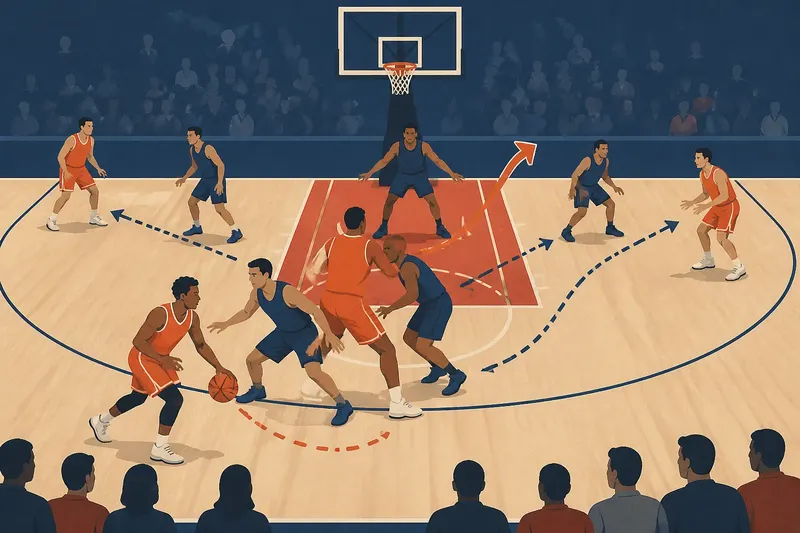
Why can a pick-and-roll leave a clear lane to the basket on one possession and an open shooter on the next? A screen gives the ball handler and screener different ways to attack, while the defense must decide which threat to contain. To read a pick-and-roll, follow what each defender does after the screen—not just who gets past whom.
Why can’t one defender cover both players?
A screen places the screener’s body in the ball handler’s defender’s path. That defender has to get around it, switch to the screener, or follow another route chosen by the defense. Meanwhile, the screener moves into new space, often toward the basket, and the handler keeps the ball.
The on-ball defender must contain the dribble. The screener’s defender may need to step toward the handler. If both commit to the ball, the screener can roll into open space; if neither helps, the handler may drive or shoot before the defense recovers.
That is the central problem: two players threaten different spaces at the same time. The offense is not automatically successful. Help defenders, passing angles, shooting ability, and the timing of the roll all matter.
What happens when the handler turns the corner?
A clean turn around the screen often means the on-ball defender was delayed and the screener’s defender stayed back or arrived late. The handler can drive, pull up, or draw another defender away from a teammate.
Watch the space between the handler and the basket. If the screener’s defender stays deep in the lane, the handler may reach the paint before facing a challenge. If that defender steps up, the handler may have time to pass to the roller. The same choice that blocks one route can open another.
A defense may ask the on-ball defender to fight over the screen while the screener’s defender briefly hedges toward the handler. A hedge is a temporary interruption, not necessarily a switch: its purpose is to slow the handler while the original defender recovers. Against a handler who is a dangerous shooter, defenders may stay close over the screen and ask the screener’s defender to manage the drive.
Watch the screener’s defender’s first step. Toward the ball signals help; backward leaves more room for the handler.
How does the roll create a passing lane?
A roll becomes dangerous when the defender who steps toward the handler cannot get back to the screener in time. The handler can pass behind that defender to a roller who may catch the ball facing the basket. A teammate may also find the roller if the defense rotates toward the ball and leaves the lane unattended.
The defenders must hand off responsibility quickly. The screener’s defender has to choose between containing the dribble and staying attached to the roller; the on-ball defender may be caught behind the play. If a third defender leaves a shooter to help, the defense must decide whether to recover to the shooter or keep protecting the paint.
Some defenses switch assignments at the screen. That can put a bigger defender on the handler and a quicker defender on the screener, changing the matchup without automatically conceding a drive. Other defenses use a drop: the screener’s defender retreats toward the basket to protect the rim while the on-ball defender works back into the play. Each approach trades one kind of risk for another.
If a pass reaches the roller, look for the defender who had been guarding the handler. If that defender is still behind the ball, the help rotation may have arrived too late.
Why can help defense free a shooter?
The handler does not have to pass to the screener. When a help defender leaves a perimeter player to crowd the ball, the handler can kick it out to that open teammate. The defense may rotate again, trying to cover the receiver before a shot or another pass.
The action can stretch beyond its first two players. A defender who helps on the drive may leave a corner shooter; another defender may rotate to the corner and leave someone open elsewhere. The offense looks for the moment when the ball moves faster than defenders can adjust.
Spacing affects how difficult those rotations are. If offensive players stand close together, one defender may threaten more than one passing lane. If they are spread around the arc and corners, a helping defender may have farther to recover. A quick pass can reach the open side before the defense resets.
Follow the offensive player farthest from the ball. If that player’s defender steps into the lane, watch whether the handler finds the opening or another defender rotates over.
What should you watch when a pick-and-roll creates no advantage?
A screen may create no useful choice if it arrives too early or too late, or at an angle that lets the defender slip around it. The handler may move away from the screen, leaving the screener’s defender free to stay with the roller. A hesitant dribble gives the defense time to recover and restore its original matchups.
Sometimes the defense is prepared for the action. The on-ball defender may go under the screen, passing between the screener and the basket, if the handler is not a threat to shoot from that range. The screener’s defender can then stay near the rolling player instead of stepping up. Going under limits the immediate drive but gives the handler room to shoot.
Say, in an invented possession, the handler has a reliable pull-up and the screener can finish near the rim. The defense goes under the screen. The handler slows and takes the open pull-up while the screener’s defender stays close enough to contest the roll. The observable result is that the defense makes the handler choose the shot rather than allowing an uncontested drive or a direct pass to the roller.
To read the possession, track the handler’s shooting space, the roller’s route, and whether a help defender leaves a shooter. The useful clue is which defender has to make the first compromise.
Which pick-and-roll details answer the questions spectators ask?
What does drop coverage mean?
In drop coverage, the screener’s defender retreats toward the basket instead of moving far out to challenge the handler. That defender tries to protect against the drive and the roll while the on-ball defender works to stay with the handler.
What does switching on a screen mean?
On a switch, the two defenders exchange the offensive players they are guarding. This can keep both defenders near the action, but it may create a mismatch the offense can attack.
Why does the handler pass before the roll?
The defense may send an extra defender toward the ball, making a quick pass a way to move the ball before the defense settles. That pass can reach the roller or a teammate whose defender has left to help.
Why does the screener stop instead of rolling?
The screener can stop in open space if the defender follows the drive toward the basket. Often called a pop, this gives the handler a passing option away from the rim if the screener can shoot from there.
How can you read the next possession faster?
Start with the screen, then follow the handler’s defender, the screener’s defender, and the nearest help defender. Ask whether the handler’s defender got through, whether the screener’s defender stepped toward the ball or retreated, and whether another defender abandoned a shooter.
- Handler’s defender: Check whether the defender goes over, under, or gets caught behind the screen. If the defender goes over, expect closer pressure on the handler; if the defender goes under, watch for an open shot and decide whether the handler takes it or passes.
- Screener’s defender: Check for a hedge, a drop, or a switch. If the defender hedges, watch for a pass behind; if the defender drops, look for a pull-up or drive before deciding which threat has space.
- Rolling player: Check whether the screener heads to the rim, stops in open space, or stays near the screen. If the player rolls, watch for a pass inside; if the player stops, look for a pop pass or a reset.
- Help defender: Check whether a teammate steps into the lane and which offensive player is left open. If the defender leaves a shooter, watch for a kick-out; if no shooter is left open, follow whether the helper can recover to the ball.
- Ball movement: Check whether the handler keeps the dribble, passes to the roller, or sends the ball to the perimeter. If the ball goes inside, watch the rim defender; if it goes out, follow the next rotation or shot.
- Screen angle and timing: Check whether the screen is set in the handler’s path before the dribble reaches it. If the defender slips around, expect little separation and watch for a reset; if the screen delays the defender, track the handler’s drive and the screener’s release.
Say, in another invented possession, a handler meets a screen on the right side while a shooter waits in the left corner. The on-ball defender goes over, the screener’s defender steps toward the handler, and the corner defender moves into the lane. The handler kicks the ball to the corner, where the shooter is briefly open. The visible tradeoff is clear: the defense crowded the drive and roll, but the corner defender must now recover or concede a shot.
These cues make the pick-and-roll easier to read without requiring you to predict the outcome. The handler and roller are not running separate plays; their options change in response to the same defenders. For a sharper read of a pick-and-roll, follow the defender forced to help, then see whether the next pass reaches the space that defender left.