The Origin of the Yellow Card in Football
The origin of the yellow card in football explains how a simple visual signal helps spectators recognize cautions and distinguish them from sendings-off.
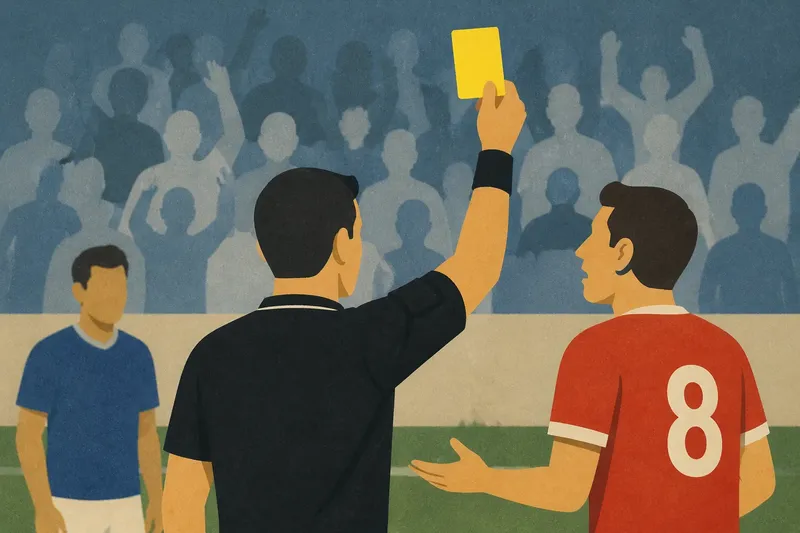
At a noisy football match, a referee can raise a yellow card and make a caution visible across the pitch without being heard. The origin of the yellow card in football is often associated with English referee Ken Aston and the challenge of making disciplinary decisions clear to players and spectators.
Why did football need a visible caution?
A referee’s words can be hard to hear over a crowd, and players may not share a language. Spectators far from the action can also miss a brief exchange. A visible signal makes it easier to recognize that the referee has issued formal discipline.
The card communicates the decision, not every detail behind it. Its simple display helps people understand that a caution or sending-off has occurred, while the incident and any explanation clarify the reason.
A useful distinction: the card makes discipline visible; it does not replace the rules that govern it.
How is the origin of the yellow card in football described?
The card system is commonly associated with Ken Aston, who considered how referees could communicate disciplinary decisions more clearly. Accounts of the idea connect its colors to the familiar traffic-light distinction between caution and stop. The signal’s purpose was practical: make the referee’s decision recognizable without relying on spoken words.
The system’s introduction and historical details should be checked against authoritative football records before being stated more precisely. For spectators, the essential point is that cards provide a visible shorthand for formal disciplinary outcomes; they do not create the offenses or determine the rules on their own.
What does each card mean?
- Yellow card: A formal caution. The referee records the warning against the player.
- Second yellow: A second caution in the same match leads to a sending-off, communicated with a red card.
- Red card: A sending-off. The player must leave the field and take no further part in the match.
- No card: A foul or stoppage does not always bring a caution. The referee may award a free kick without showing a card.
Say a midfielder has already received a yellow card and then delays a restart. If the referee judges the delay to merit another caution, the referee shows a second yellow and then a red. The player is sent off, and spectators can see the outcome even if they cannot hear the exchange.
What should spectators watch for after a card?
Notice who receives the card and whether that player was already cautioned. A first yellow is a formal warning; a second caution in the same match leads to dismissal. The order of events—such as the stoppage, the referee’s conversation and the card—can help establish what happened.
The card alone does not explain the referee’s reasoning or tell you whether a competition’s procedures allow a decision to be reviewed. For the reason, look to the incident, the referee’s gestures or words, and any official match explanation.
What do spectators often ask about the yellow card?
Was the yellow card created for one particular foul?
No. The card is a signal for a caution, while the applicable rules determine which conduct merits one. Different offenses can lead to the same card.
Does one yellow card mean a player is sent off?
No. A yellow card is a caution. A player is sent off if the player receives a second caution in the same match or is shown a red card.
Can the card tell you why a player was cautioned?
Not by itself. It shows that the referee issued a caution, but the incident and any explanation provide the context.
Why use two different card colors?
The colors distinguish a caution from a sending-off. That contrast makes the broad disciplinary outcome easier to recognize at a distance.
Why does the signal remain useful?
A card turns a brief disciplinary decision into a public visual cue. It is especially helpful when words are difficult to hear or understand, though it cannot explain the full reasoning behind a ruling.
When a referee raises a card, watch both the signal and what follows: who received it, whether that player had already been cautioned, and how play resumes. Those details make the card’s meaning clearer than color alone.